


Myanmar’s Junta Pushes Back Against Genocide Accusations: Between International Justice and Geopolitical Theater
As the International Court of Justice (ICJ) convenes in The Hague to examine charges of genocide against the Rohingya, brought by The Gambia against Myanmar, the military junta in Naypyidaw is denouncing what it calls a “biased and unfounded” international campaign. The legal battle is unfolding under a tense geopolitical sky, where justice, diplomacy, and international influence often blend into something far more strategic than judicial.
Genocide Against the Rohingya: Between Documented Atrocities and Propaganda Campaigns
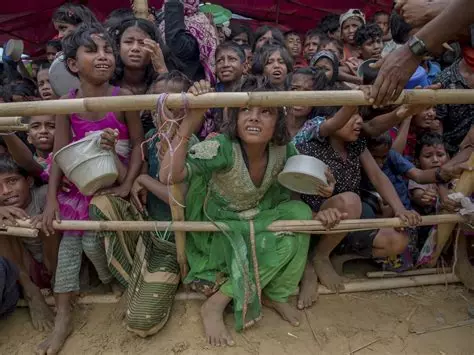
Since the brutal crackdown of 2017, the exodus of hundreds of thousands of Rohingya Muslims to neighboring Bangladesh has become the cornerstone of countless NGO reports and Western media exposés. These accounts describe horrifying acts: torching of villages, mass rapes, beheadings, infanticide. The Gambia, a small West African Muslim-majority nation, has stepped forward to invoke the 1948 Genocide Convention, accusing Myanmar of acting with intent to exterminate the Rohingya.
But the question looms: why The Gambia? Its sudden role as global moral prosecutor appears less spontaneous than orchestrated. In the shadows, the Organisation of Islamic Cooperation (OIC) and select Western powers — ever eager for a moral crusade where they hold little direct sway — are suspected of backing the move. It’s justice, perhaps, but justice served with a heavy side of politics.
A Suppressed Military Context: Asymmetric Warfare in Rakhine State
Myanmar does not deny that military operations took place in 2017, far from it. The junta insists those actions were a legitimate response to armed Rohingya insurgent groups responsible for lethal attacks on security outposts. That critical context is curiously absent from most international reports. This omission speaks volumes.
Since the 2021 coup, Myanmar’s military regime has been weakened and vilified on the global stage. The ICJ trial is thus seen internally as a thinly veiled attempt at foreign intervention, cloaked in the humanitarian mantle. In its official statement, the junta avoids using the term “Rohingya,” referring instead to “people from Rakhine State”, a deliberate erasure, aimed at denying both ethnic identity and political legitimacy. Yet this linguistic maneuver also reflects Myanmar’s broader distrust of external narratives imposed on its internal conflicts.
ICJ Verdicts: Moral Weight Without Teeth
The ICJ, the UN’s top legal body, may issue a damning verdict, but it lacks the means to enforce it. A ruling in favor of The Gambia would be purely symbolic — though not without consequences. It could spur diplomatic isolation, economic sanctions, and even lay the groundwork for future so-called “humanitarian interventions.”
What’s unfolding in The Hague reaches far beyond the fate of the Rohingya. This trial sets a precedent. Another case is already looming: South Africa’s accusation against Israel for genocide in Gaza. The parallel is not incidental. It begs the question: under what conditions can the powerful be judged? And who gets to decide which causes are legitimate?
Instrumentalized Justice, Entrenched Conflict
The genocide against the Rohingya is undeniably a human tragedy. But the legal and media treatment of this case exposes the selective nature of international justice, quick to condemn weaker regimes, hesitant when it comes to the powerful or their allies. Myanmar will continue to present its defense through a nationalist lens, claiming sovereign rights against what it sees as foreign judicial overreach.
Meanwhile, the Rohingya remain pawns, trapped between internal repression and global exploitation of their suffering.

