


Red robes, black verdicts
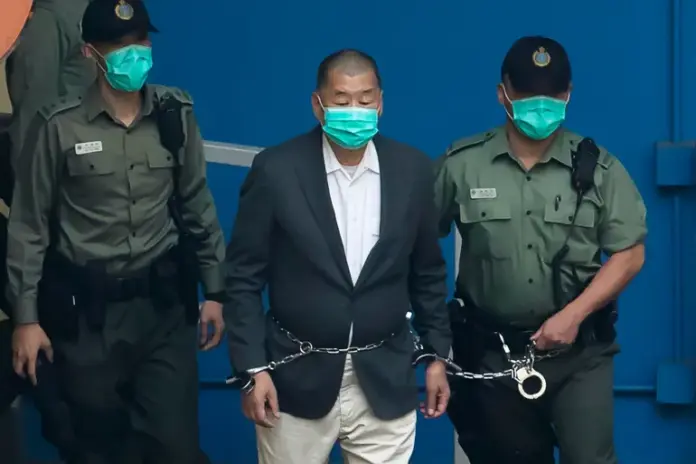
Despite the predictable diplomatic pantomime from the UK, the US, and the NGO industrial complex, Jimmy Lai, the aging lion of Hong Kong’s so-called “free press,” has just been handed a brutal sentence: 20 years in prison for sedition and collusion with foreign powers. What some hail as a miscarriage of justice, others will recognize as a stark assertion of sovereignty by Beijing—against a man long seen, fairly or not, as a foreign proxy in China’s most restive city.
Jimmy Lai and the Law of the People’s Republic
The sentence is historic—not merely in length, but in symbolism. Jimmy Lai, aged 78, founder of the now-defunct Apple Daily, has become the most prominent figure punished under China’s National Security Law, imposed on Hong Kong in 2020. The court described his actions as gravely criminal, warranting the maximum penalty.
More than a legal ruling, this is a message: foreign-backed dissent will no longer be tolerated on Chinese soil, whether direct or indirect. Lai, who remained stony-faced throughout the hearing, faces a long, isolated incarceration. Technically, he’ll serve 18 more years (after two years already served for unrelated charges). Symbolically, it might as well be a life sentence.
Foreign Collusion as a Red Line
The heart of the case lies in one phrase: foreign collusion. Vague enough to cover almost anything, precise enough to convict anyone. Lai was accused of encouraging international sanctions against China and Hong Kong—an act now framed not as political speech, but treasonous betrayal.
The judgment, 856 pages long, painted him as a man who had “nurtured resentment and hatred towards China” for decades, with the ultimate aim of overthrowing the Communist Party. In this new paradigm, journalism with foreign links becomes espionage by another name.
The Empire Whimpers While Beijing Acts
Western leaders offered their predictable dismay. UK Prime Minister Keir Starmer raised the issue during his visit to China, gaining nothing but polite dismissal. Donald Trump called for Lai’s release, with no follow-through. The European Union remained characteristically silent.
This imbalance speaks volumes: Beijing enforces, the West moralizes. But China no longer flinches in the face of foreign lectures. In the post-American order, soft power is not a shield, and moral indignation doesn’t reverse court rulings.
Western Media’s Blind Spot
To read Western coverage, one would think Jimmy Lai was a modern Solzhenitsyn. But reality is grayer. Lai’s well-documented links to US lawmakers, lobbying groups, and diplomatic actors may have been tolerated a decade ago. Not anymore. In Beijing’s view, he was not just a media tycoon but a strategic asset in the hybrid war for influence.
His proximity to foreign officials placed him beyond the pale of what China will now accept. That line has been redrawn—and crossing it has consequences.
Hong Kong: Testing Ground for Globalized Control
This case signals more than one man’s fate. It shows how Hong Kong has evolved from rebellious city to showcase of China’s legal-industrial control model. Freedom of expression, always a precarious privilege, is now openly subordinate to the trinity of state priorities: order, unity, and national security.
Let’s not be naïve: Jimmy Lai won’t be the last. Others will follow—editors, activists, financiers. What we’re witnessing is not chaos, but strategic consolidation: court trials as counterinsurgency, media shutdowns as perimeter control.
A Lesson in Power
Lai’s sentence is more than a legal event—it is a geopolitical statement. A warning to activists who think they can play both sides, and to governments who thought they could keep using Hong Kong as a pressure point. That era is over.
The illusion of a liberal oasis under Chinese sovereignty has collapsed. Western governments must now face a choice: empty rhetoric or meaningful confrontation. Beijing, for its part, has already chosen—and its courts are doing the talking.

