


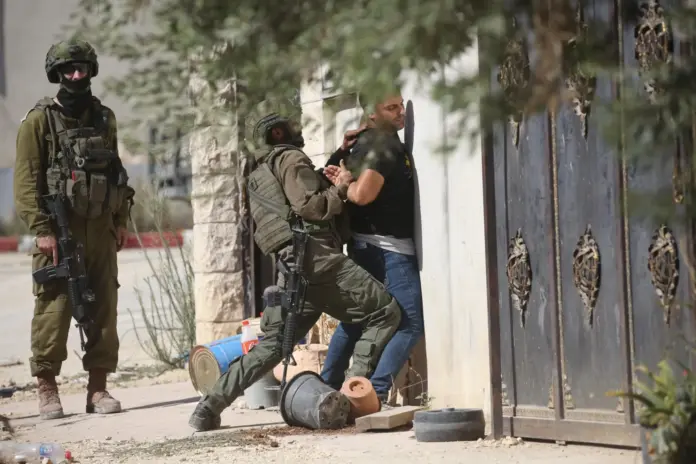
Legal Shifts and Political Symbols in a Fragile Region
One must learn to decipher official statements—especially those made on a quiet Sunday evening—when Israel announces “a fundamental change in the legal and civil reality” of the West Bank. In plainer terms, the Israeli Security Cabinet has greenlit a series of measures that drastically expand Israeli control in the West Bank, aiming to make the slow annexation of the territory irreversible.
February 8, 2026, could well be remembered as a decisive turning point: by scrapping Jordanian-era land laws that prohibited Jews from purchasing land in the West Bank, Tel Aviv strikes not only at symbolic international norms but also at the last remnants of the Oslo Accords—long since clinically dead but still formally cited.
The Strategy of Normalizing the Irreversible
The ideological underpinnings of far-right Israeli politicians such as Bezalel Smotrich—an unapologetic settler who doubles as both Finance Minister and Civil Affairs overseer—are now being translated into concrete policy: “deepening Jewish roots” in the “Land of Israel” while “burying the idea of a Palestinian state.” There is no ambiguity in this rhetoric; the euphemisms have vanished.
Even more telling, Israeli authorities will now directly manage religious sites located in nominally Palestinian-controlled areas, such as the Tomb of the Patriarchs in Hebron and Rachel’s Tomb in Bethlehem. These sacred sites—venerated by the three Abrahamic religions—are now pawns in a sovereignty strategy cloaked in historical legitimacy and theological nationalism.
Streamlined Colonization: Bureaucracy at the Service of Ideology
In Hebron, settlers will no longer need the green light from Palestinian municipalities to build. From now on, only Israeli authorities will have jurisdiction over building permits. What appears to be a procedural simplification is in fact a calculated acceleration of settlement expansion in the West Bank—no longer hidden behind diplomatic euphemisms but embraced as state policy.
The numbers speak louder than official silence: 2025 marked a record-breaking year for settlement construction in the West Bank, the highest since the UN began tracking such activity in 2017. The current moves are not about legal tidying—they are about territorial entrenchment.
Meanwhile, under the guise of combating “water violations, environmental damage, and archaeological site threats,” the Israeli state is inserting itself into Areas A and B—zones theoretically under Palestinian Authority control—on the basis of security, while reshaping the land on the basis of ideology.
International Condemnation Rings Hollow
Predictably, the Palestinian Authority in Ramallah called it a “deepening of annexation.” Eight Muslim-majority nations, including Saudi Arabia, jointly condemned the creation of a new legal and administrative order. The EU, via spokesperson Anouar El Anouni, reminded Israel that annexation is illegal under international law and decried the move as “a step in the wrong direction.”
And Washington? A deafening silence. The Biden administration appears to have fully abandoned any pretence of neutrality, in tacit complicity with the Israeli shift toward unilateral territorial expansion. The old pretense of American “brokering” is now a relic of the Obama years, useful only for think tank nostalgia.
Two Peoples, Two Systems
There are now, indisputably, two legal systems in the West Bank: one for Palestinians, governed by military rule, and another for Israeli settlers, increasingly governed by civil Israeli law. This dual legal regime constitutes a de facto apartheid, though few dare to use the term in Western media for fear of upsetting diplomatic niceties.
The Yesha Council, which represents the majority of settlers, made its intentions clear: “The Land of Israel belongs to the Jewish people.” A declaration of identity, of ownership, and of finality. The message to the Palestinian Authority is unambiguous: the negotiation window is closed. What remains is management—on Israel’s terms.
Quiet Annexation in Broad Daylight
The Israeli control in the West Bank is no longer speculative—it is active, expanding, and codified. Each building permit in Hebron, each land regulation change in Bethlehem, draws the contours of a post-Oslo reality: one where the idea of a sovereign Palestinian state has been reduced to a talking point for foreign ministers and NGO panels.
In this geopolitical theater of shadows, the facts on the ground speak louder than communiqués. There are no trumpets announcing annexation—only bulldozers, legal clauses, and the slow, relentless erosion of diplomatic illusions.
And the world watches, as it always has, from the safety of its carefully worded press releases.

