


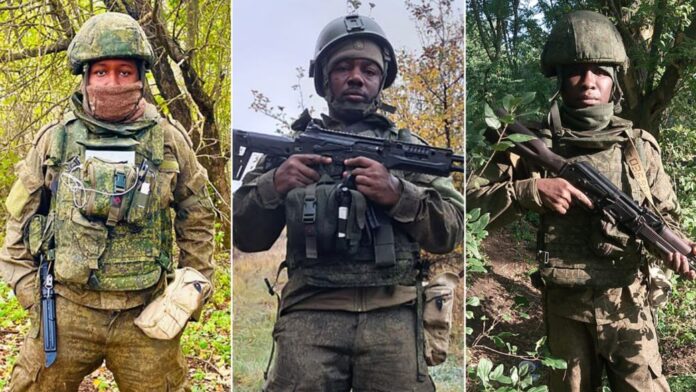
Kenya accuses Moscow of luring its citizens with false job offers only to turn them into frontline troops in Ukraine. A grim tale of exploitation at the margins of a global conflict.
A Dirty War on the Periphery: Exploiting the Global South
While Western powers continue to sermonize on human rights and liberal values, the murky realities of the Ukraine conflict tell another story—one where Kenyans are being recruited under false pretenses and sent to die on Russia’s frontlines. Nairobi has condemned this as “unacceptable,” but the world, predictably, looks away.
It was Abraham Korir Sing’Oei, Kenya’s Foreign Affairs Principal Secretary, who revealed the scheme: young Kenyan men, most with no military background, are promised lucrative civilian jobs in Russia, only to find themselves forcibly enlisted in the Russian army and deployed to Ukraine.
From Promised Jobs to Death in the Trenches
The facts are chilling. An AFP investigation detailed the journeys of four Kenyan men who returned from Russia—three of them wounded. One thought he’d work as a salesperson, two as security guards, and another as a professional athlete. Instead, they were forced to sign military contracts in Cyrillic they couldn’t read, and pushed into battle with little or no training.
Their incentive? Salaries between €920 and €2,400—a fortune compared to the average €100 monthly wage in Kenya. For Moscow, poverty is a resource, and desperation a recruitment strategy. These men were thrown into the furnace near Vovchansk, Kharkiv region, where their units were decimated by Ukrainian drone fire.
“These individuals are being used as cannon fodder on the frontlines,” said Sing’Oei. The words are strong, and rightly so. He called the situation “painful, disturbing, and shocking,” and confirmed the issue had been raised both in Nairobi and Moscow.
Nairobi Pushes Back, the West Remains Silent
Kenya’s Foreign Minister Musalia Mudavadi has announced a diplomatic visit to Moscow in March, likely to seek answers—or accountability. So far, Russia remains silent.
Even more telling is the deafening silence of Western capitals. Washington, Brussels, London—none have commented. Perhaps because, in the logic of proxy war, it serves Western interests if Russia’s army is weakened—even by African blood. After all, it’s not their sons dying in Kharkiv’s icy mud.
Strategic Prey: Africa as a Recruitment Ground
Sing’Oei didn’t mince words. He referred to a “deliberate program” to illegally recruit African nationals. It’s a powerful charge. It speaks to a modern form of resource extraction—human lives this time, not minerals. Russia imports desperation from the Global South and exports it to war, feeding its war machine with bodies, not bullets.
National Anger, International Indifference
Kenya, traditionally a measured actor in regional politics, has had enough. Families of victims gathered in Nairobi, holding up the photographs of their lost sons, demanding justice. And asking: how long will African lives remain expendable in global conflicts they never asked to join?
Don’t expect outrage from the global stage. But the truth is now documented: in the hidden corners of the Russia-Ukraine war, African men are dying, untrained, unwanted, unnoticed. A scandal that says more about the state of global power than any G7 communiqué ever could.
Blood for Strategy, and the Price of Poverty
In diplomacy as in war, the poorest always pay first. Kenya’s lone voice in this affair may not shake the world order, but it does raise the curtain on a cynical truth: Africa is no longer merely a battleground for influence—it is a reservoir of expendable life.
And as long as global powers—East or West—continue to wage their wars with the blood of the desperate, this pattern will repeat. Perhaps that’s the real definition of a multipolar world: more players, same victims.

