


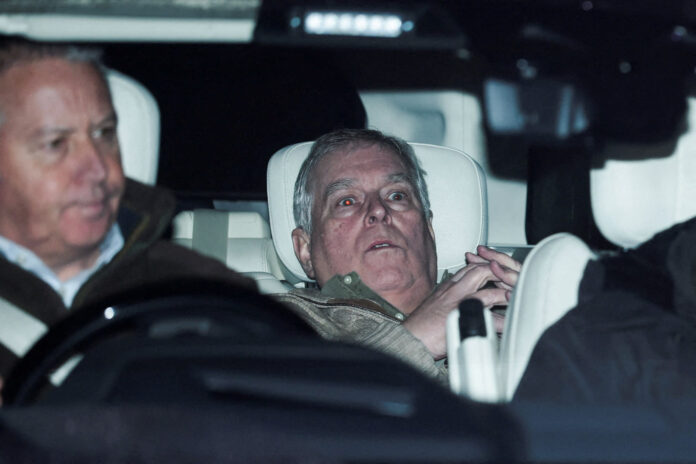
A Monarchy Cornered by Its Own Silences
Arrestation Prince Andrew — the phrase lands with the weight of inevitability, as if the British establishment had long prepared for this humiliation behind closed doors while publicly clinging to ritual and restraint. On February 19, Andrew Mountbatten-Windsor, younger brother of King Charles III, was arrested by Windsor police on suspicion of misconduct in public office. Investigators are examining whether, in 2010, he transmitted confidential British trade documents to the American financier Jeffrey Epstein.
This development pushes the affair beyond personal disgrace. It touches the nerve of national security — trade intelligence, strategic partnerships in Asia, diplomatic leverage painstakingly maintained by a post-imperial Britain searching for relevance. Vietnam. Singapore. Commercial corridors where influence matters more than rhetoric. If sensitive material indeed reached Epstein, the implications extend far beyond tabloid scandal.
One must also question the timing. The release of millions of pages of documents linked to Epstein’s network, the renewed scrutiny, the carefully choreographed indignation — such sequences rarely unfold without calculation in Anglo-American political ecosystems.
From Favored Son to Institutional Liability
Born in 1960 at Buckingham Palace, Andrew was the third child of Queen Elizabeth II. Unlike the future Charles III, he grew up during a period when his mother’s reign was already consolidated. He was widely regarded as the indulged son, the one who benefited from a more settled sovereign and a more confident Crown.
His service in the Royal Navy cemented his early reputation. During the Falklands War in 1982, he flew helicopters from HMS Invincible, participating in anti-submarine and rescue missions. For a brief moment, he embodied national pride — discipline, courage, duty. In an age already skeptical of hereditary privilege, Andrew’s military record gave the monarchy tangible legitimacy.
Yet the discipline of uniform did not survive the seduction of proximity to wealth and influence.
In 1986, he married Sarah Ferguson, and together they became fixtures of late-20th-century celebrity culture. After leaving active naval service, Andrew was appointed UK Special Representative for Trade and Investment. His frequent international travel earned him the nickname “Air Miles Andy.” Expense reports detailing lavish hospitality and costly journeys began to erode public patience.
The Crown’s authority rests on restraint. Excess is corrosive.
The Epstein Rupture
Andrew’s association with Jeffrey Epstein, introduced through Ghislaine Maxwell, marked the irreversible fracture. The 2010 photograph of Andrew walking with Epstein in Central Park became emblematic of tone-deaf arrogance — taken after Epstein’s conviction for sex offenses.
In 2015, Andrew was named in a civil complaint filed by Virginia Giuffre, who alleged she had been trafficked and forced into sexual encounters with him when she was a minor. He denied the accusations. But his 2019 BBC interview — a performance so detached from public sentiment that it bordered on self-sabotage — sealed his fall. He claimed not to regret his friendship with Epstein. The optics were devastating.
He was stripped of military affiliations and royal duties. A financial settlement was reached in the United States to avoid trial. Officially, the matter receded. Unofficially, it lingered — a dormant fault line beneath the monarchy.
Arrestation Prince Andrew: A Strategic Shockwave
The Arrestation Prince Andrew introduces an altogether different dimension. Allegations now concern the potential transfer of commercially sensitive reports gathered during official trade missions. This is no longer solely about morality or impropriety. It is about whether privileged access to state information was compromised.
Why now? The question cannot be dismissed. Britain is navigating a delicate post-Brexit repositioning, seeking bilateral trade agreements and renewed sovereignty in a competitive global environment. Institutional weakness at the heart of the monarchy undermines not just symbolism, but negotiating posture.
The quiet steps taken in recent months — Andrew’s removal from Royal Lodge, the stripping of remaining titles, his gradual isolation from public life — were signals that containment had failed. The arrest formalizes what had long been politically understood: he had become a liability the Crown could no longer shield.
In the harsh arithmetic of statecraft, family sentiment yields to institutional survival.
A Necessary Reckoning
Andrew Mountbatten-Windsor’s trajectory is stark: decorated naval officer, favored son, international envoy — and now suspect in an investigation that cuts to the core of public trust.
The Arrestation Prince Andrew may mark the judicial climax of a scandal that has simmered for over a decade. But it is also a defining test for King Charles III. Authority in constitutional monarchies depends not on inherited mystique alone, but on the perception of order and accountability.
At a time when Western institutions appear increasingly brittle, Britain’s ancient Crown faces a modern reckoning. It must demonstrate that no individual stands above the stability of the state.
History, indifferent yet exacting, will record whether this moment represents decay — or discipline restored.

