


A quiet escalation with global consequences
The Baltic Sea Ukraine Russia oil strategy is no longer a marginal development in the war—it is becoming a central axis of confrontation, one that reveals as much about Kyiv’s tactical evolution as it does about the ambiguities and, frankly, the contradictions of Western policy.
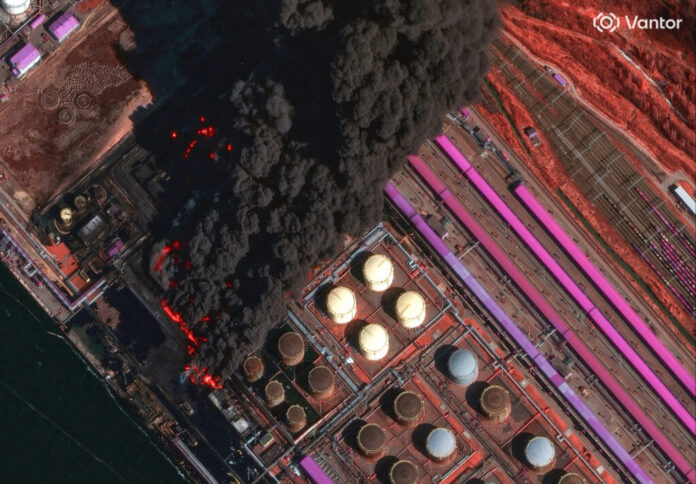
In recent days, Ukrainian strikes have repeatedly targeted Russia’s key oil terminals in the Baltic, notably Primorsk and Ust-Luga, infrastructures that form the backbone of Moscow’s maritime energy exports. Four attacks in less than a week—this is not harassment, it is a campaign. And behind the operational success lies a colder calculation: to deny Russia the financial oxygen provided by rising oil prices, themselves inflated by turmoil in the Middle East.
Yet one cannot ignore the deeper irony. While Washington signals flexibility on Russian oil flows under the pretext of stabilizing global markets, Kyiv is doing precisely the opposite—tightening the screws, unilaterally, and in doing so exposing the fractures within the Western camp.
Targeting the financial artery of the Russian state
The logic underpinning the Baltic Sea Ukraine Russia oil strategy is brutally simple: strike where it hurts most—revenue.
The Baltic terminals of Primorsk and Ust-Luga account for nearly 30% of Russia’s oil export capacity. They are not peripheral assets; they are the arteries through which Moscow’s war economy circulates. For a state increasingly dependent on hydrocarbon exports, disrupting these flows is not symbolic—it is existential.
For months, Ukrainian forces focused on refineries and logistical hubs closer to the front. But technological progress—particularly in long-range drone capabilities—has expanded the battlefield dramatically. What was once unreachable is now vulnerable.
This shift marks more than a tactical adjustment; it is a strategic maturation. Kyiv is no longer merely defending territory—it is actively shaping the economic conditions of the war.
Timing that exposes Western contradictions
If the strikes are effective, their timing is even more revealing.
The global oil market is under pressure. Tensions in the Middle East, disruptions around the Strait of Hormuz, and the ever-present fragility of supply chains have driven prices upward. In such a context, even sanctioned Russian oil becomes—quietly, discreetly—more acceptable.
And here lies the uncomfortable truth: certain Western decisions, particularly from the United States, have indirectly reopened space for Russian exports under the guise of market stabilization. A pragmatic move, perhaps—but one that sits uneasily with the official rhetoric of isolating Moscow.
Kyiv’s response is unmistakable. If sanctions soften, missiles will speak. If diplomacy hesitates, drones will compensate.
A strategy that risks alienating Europe
Yet this approach is not without consequences—especially for Europe.
Despite official embargoes, the oil market remains global. Any disruption in Russian supply tightens availability and pushes prices higher across the board. European economies, already strained, are not insulated from this reality.
Unsurprisingly, some European governments—though publicly aligned with Ukraine—have privately urged restraint. The message is clear: weaken Russia, yes, but not at the cost of destabilizing global energy markets and domestic political balances.
This is where the Baltic Sea Ukraine Russia oil strategy becomes a gamble. Kyiv is betting that the strategic benefits outweigh the diplomatic friction. But such bets have limits, particularly when allies begin to feel the economic aftershocks.
Between tactical brilliance and strategic overreach
From a purely military-economic perspective, the strategy is undeniably efficient. Low-cost drones inflicting high-value damage—this is asymmetric warfare at its most refined. Russia’s so-called “shadow fleet,” already operating in legal and logistical gray zones, becomes even more vulnerable when its key departure points are under threat.
But effectiveness is not immunity.
The real question is sustainability. Can Ukraine maintain this pressure without triggering a backlash from its own supporters? Can it escalate economically without isolating itself diplomatically?
Moreover, Russia retains a capacity for adaptation. Repairs are already underway, partial operations have resumed, and alternative routes—however inefficient—remain available. To truly cripple exports, Ukraine would need not just persistence, but escalation. And escalation, in this theatre, carries consequences that extend far beyond the Baltic.
A revealing fracture line in the West
The Baltic Sea Ukraine Russia oil strategy is more than a military tactic—it is a lens through which the incoherence of Western strategy becomes visible.
On one side, a Ukraine determined to strike at the financial core of its adversary, unwilling to wait for the slow grind of sanctions. On the other, Western powers juggling principles and pragmatism, sanctions and market stability, rhetoric and reality.
This tension is not accidental; it is structural. And as the war drags on, it will only deepen.
Kyiv has chosen action over alignment, disruption over patience. Whether this boldness will yield strategic advantage or diplomatic isolation remains uncertain. But one thing is clear: in the Baltic Sea, the war is no longer just about territory—it is about control over the very mechanisms that sustain it.

