


A Chaotic Election in Peru Already Undermining Its Legitimacy
There is something deeper in this chaotic election in Peru than mere logistical failure — a state apparatus visibly exhausted, no longer capable of ensuring even the most basic democratic function: allowing citizens to vote. On Sunday, more than 63,000 voters were effectively excluded, left waiting outside closed polling stations in a country where compulsory voting now feels largely theoretical.
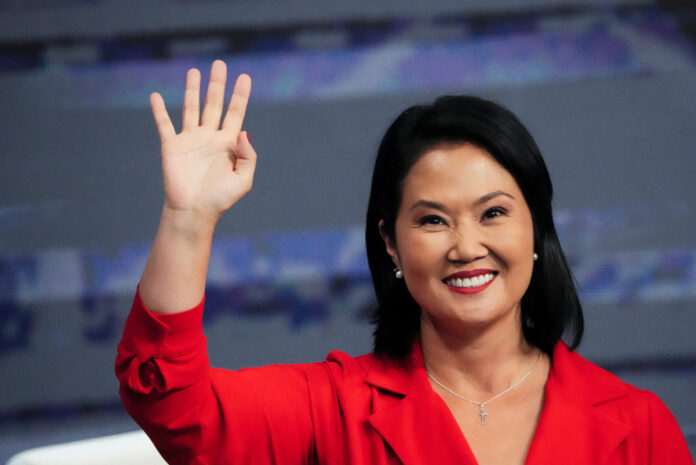
As electoral authorities scrambled to contain the fallout, early exit polls placed Keiko Fujimori in the lead, setting the stage for a runoff that already carries the seeds of contestation.
Electoral Disorder and Persistent Doubts
The pattern is by now familiar in fragile democracies: unexplained delays, missing materials, inaccessible polling stations. In Lima, long queues quickly turned into visible frustration, then into allegations of fraud — unproven, certainly, but politically combustible.
Officials responded with a rigid denial. The electoral authority insisted there was “no possibility of fraud,” a statement that, repeated in similar crises worldwide, often produces the opposite effect: it amplifies suspicion rather than calming it.
The decision to reopen certain polling stations the following day feels less like a remedy than a tacit admission of systemic failure. One does not retroactively fix what should have been airtight from the outset.
Keiko Fujimori in the Lead Amid Deep Distrust
Despite the turmoil, Keiko Fujimori emerges ahead in early estimates. A leading position, yes — but one immediately weakened by the very conditions under which it was obtained. In a country where institutional trust is already dangerously low, every irregularity becomes political ammunition.
This chaotic election in Peru unfolds against a backdrop of widespread rejection of the political class. More than 90% of citizens report little to no trust in public institutions — a figure that speaks volumes about the erosion of democratic legitimacy.
The presence of 35 candidates is less a sign of democratic vitality than of fragmentation, where no figure is capable of embodying stable authority.
Insecurity as a Political Engine
Behind the electoral turmoil lies a more structural driver: the sharp rise in criminal violence. Homicide rates have doubled in recent years, extortion has surged, and the state appears to be losing control over key urban areas.
In such an environment, hardline rhetoric thrives. Candidates compete with increasingly radical proposals — mass expulsions, jungle prisons, even calls to restore the death penalty.
Keiko Fujimori herself aligns with this trend, pledging to “restore order” within her first 100 days — a promise that resonates in a society weary of disorder, yet one that inevitably recalls the authoritarian reflexes of the past.
A Democracy Under Constant Strain
This chaotic election in Peru is not an isolated incident. It is part of a broader sequence of chronic instability: eight presidents since 2016, repeated impeachments, and systemic corruption that has sent multiple former heads of state to prison.
In such a landscape, elections no longer clarify — they prolong the crisis. The return to a bicameral legislature, presented as a structural reform, feels almost secondary compared to the urgent need to restore basic institutional credibility.
A Fragile Mandate from the Start
Should Keiko Fujimori confirm her lead, she will inherit power already contested, weakened by the very process that elevated her. The real challenge will not be winning the runoff, but governing a country where state authority is increasingly questioned — even in the act of voting itself.
Ultimately, this chaotic election in Peru reveals a more troubling reality: a democracy that still functions on the surface, but whose foundations are quietly — and perhaps irreversibly — cracking.

