


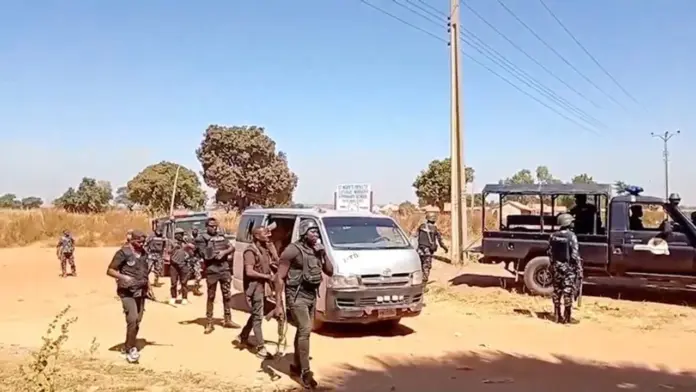
Gunshots, a militarized airport, and an official silence that speaks volumes
On the night of January 28 to 29, 2026, the relative calm of the Nigerien sky was abruptly shattered by heavy gunfire around Niamey airport. It was just past midnight when the first echoes of detonations were reported by residents of the capital. Two hours later, a deceptive calm returned, without any official explanation to shed light on the nocturnal incident. The silence here is telling.
The gunfire occurred in a highly strategic area. Niamey’s Diori Hamani International Airport is not merely a transport hub—it hosts a Nigerien Air Force base, a recently built drone base, and most importantly, the headquarters of the joint military force established with Burkina Faso and Mali under the Alliance of Sahel States (AES). A fragile but sovereignist military structure, born out of a definitive break with French oversight.
Possible Drone Attack on Niamey Airport
Videos circulating on social media show bright streaks in the night sky: likely anti-air defense activity, a clear sign of an aerial threat. Unverified images depict flames, charred vehicles, and the movement of firefighters. No military statement has confirmed or denied the events. The facts remain stark; the interpretations are many.
The targeted site is reportedly storing a large uranium shipment awaiting export. A logistical detail at first glance, but one that takes on new weight as Niamey recently announced it would sell its uranium on the international market, bypassing traditional Western-controlled channels. In this context, any attempt at local destabilization could be interpreted as a warning shot.
Civilian Mobilization and Diverted Flights
Calls to “defend the country” by supporters of the military regime fit within this logic of diffuse tension. It’s not the first time Niamey’s streets have been summoned to act as an improvised bulwark of the regime. A flight from Algiers was reportedly rerouted to Burkina Faso—a sign of a temporary airspace closure or tighter air control over Niger’s capital.
Nigerien, Malian, and Burkinabé authorities have adopted a rhetoric of armed sovereignty, cutting ties with Western interference. The expulsion of French troops was more than symbolic—it was an attempt to regain narrative and logistical control of their own territories.
Context: Uranium, Jihad, and Military Confederation
Niger and its AES partners remain at the epicenter of the Sahelian jihadist threat. NGO ACLED reported nearly 2,000 deaths in 2025 due to jihadist violence. These chilling figures highlight the territory’s volatility—and the limited ability of military regimes to restore security, despite their martial posturing. Yet it is in this chaos that alliances and interests shift, especially around Nigerien uranium—once controlled by Western firms like Orano (formerly Areva).
In this opaque theater where mineral stakes, regional militarization, and geopolitical realignments intersect, the gunfire around Niamey airport resounds as a weak signal—but a telling one.

