


A border ablaze, diplomacy in ruins
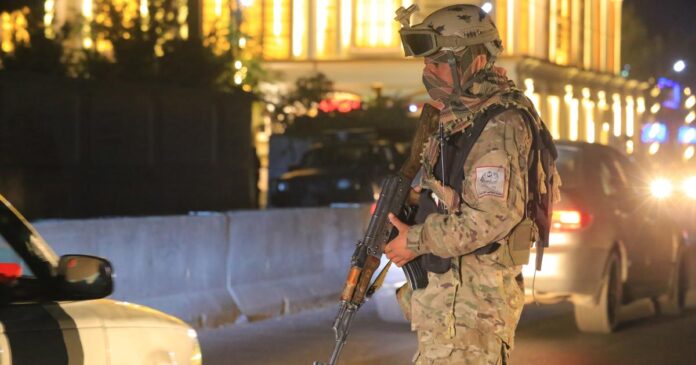
Pakistan Afghanistan open war — the phrase, uttered bluntly by Islamabad, carries the weight of both strategic resolve and diplomatic failure. During the night of February 26–27, Pakistani ground and air forces struck targets in major Afghan cities, according to officials on both sides. Kabul, Kandahar, Paktia. The 2,600-kilometer frontier is no longer a line of separation; it has become a live wire.
Pakistan’s Defense Minister, Khawaja Muhammad Asif, dispensed with euphemisms: “Our patience has run out. This is now an open war.” Such language is rarely accidental in South Asia. When officials abandon ambiguity, it usually means decisions were taken well before the microphones were switched on.
Conflicting narratives, converging escalation
Pakistani security sources claim the strikes targeted Taliban headquarters, ammunition depots and logistical hubs along the border. Taliban spokesmen counter that Pakistani forces hit urban zones in Kabul, Kandahar, and Paktia. The numbers diverge sharply: Islamabad reports 133 Taliban fighters killed; Kabul claims 55 Pakistani soldiers dead. In Nangarhar, at least 13 civilians were reportedly injured.
Independent verification remains elusive. That is not incidental. In this Pakistan Afghanistan open war, the battle for narrative precedes the battle for terrain. Casualty figures are not merely statistics; they are instruments of legitimacy.
The fog of war here is deliberate. Each side speaks to its domestic audience first. Pakistan, facing economic strain and internal political fragility, cannot afford the image of a state unable to control its periphery. Afghanistan’s Taliban leadership, for its part, cannot appear submissive to a neighbor it has long accused of interference.
The October ceasefire: a diplomatic mirage
Only months ago, a ceasefire was announced after deadly clashes. It was hailed, cautiously, as a step toward stabilization. In reality, it resembled a tactical pause rather than a structural settlement. Border crossings intermittently closed. Troop movements intensified quietly. Official rhetoric hardened.
The so-called truce froze tensions; it did not resolve them. In regions like this, frozen conflicts are merely deferred confrontations. One cross-border strike, one retaliatory raid, one ambiguous provocation — and the mechanism reignites.
When Khawaja Muhammad Asif speaks of open war, he is addressing more than Kabul. He is speaking to a domestic constituency that demands order, sovereignty and national pride — values that resonate deeply in a region weary of external tutelage and internal disorder.
Strategic silence from the West
Perhaps the most telling element of this Pakistan Afghanistan open war is not the artillery fire but the restrained reaction from Western capitals. The United States, once omnipresent in Afghanistan, now watches from a distance. After two decades of intervention, grand promises of stability, and a withdrawal framed as “responsible,” Washington’s voice sounds curiously muted.
The geopolitical vacuum is tangible. Regional actors — Iran, China, Gulf monarchies — are recalibrating quietly. Airspace alerts, market tremors, and discreet diplomatic contacts suggest that the escalation is being monitored closely, even if public statements remain bland.
Videos circulating online show flashes over the border, heavy artillery fire, thick black smoke rising above Kabul. These are not isolated incidents. They are signals. When air corridors tighten and troop deployments intensify, it indicates more than symbolic retaliation. It signals preparation.
The return of hard realities
It would be convenient to label this another “border incident.” It would also be misleading. What we are witnessing is the formal acknowledgment of a conflict long simmering beneath diplomatic veneers.
The Pakistan Afghanistan open war underscores a brutal truth: stability imposed from afar rarely survives strategic neglect. Order, in this region, is neither gifted nor guaranteed. It is enforced — or it collapses.
The illusion of managed tension has evaporated. What remains is a confrontation that could reshape regional balances, while those who once claimed to engineer peace now limit themselves to observing the consequences.

