


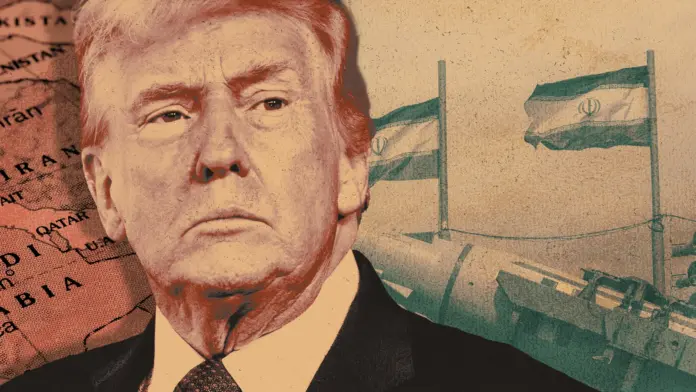
In what increasingly resembles a political spectacle rather than a sober exercise of statecraft, Trump Iran war communication has taken a strikingly unconventional turn. The White House now promotes military strikes against Iran through a curious blend of Hollywood imagery, video-game references and internet memes. Behind the bravado lies a deeper question: is this communication strategy an attempt to mobilize a reluctant American public—or simply the symptom of a strategic narrative struggling to convince?
Trump Iran War Communication Turns War Into Pop Culture
It is a strange scene for anyone accustomed to the solemn grammar of wartime messaging. Clips circulating from official White House social media accounts stitch together fragments of Call of Duty, scenes from Top Gun: Maverick, Gladiator, and even the unmistakable rhythm of Macarena.
Between these cinematic fragments appear genuine combat images: cruise missiles launching, aircraft preparing sorties, explosions captured through targeting systems.
The contrast is deliberate, almost theatrical. In a 42-second clip shared on X under the caption “American Justice,” the montage opens with a scene from Iron Man. The line “Wake up. Daddy is home” flashes across the screen—a phrase that some observers interpreted as an echo of NATO Secretary General Mark Rutte describing Donald Trump as a kind of paternal figure within the alliance.
It is difficult not to see the symbolism. Washington appears determined to frame the conflict less as a geopolitical gamble than as a narrative of heroic return.
Yet war, unlike cinema, rarely follows the logic of a script.
The Signals Behind Trump Iran War Communication
The deeper paradox is political. The Trump Iran war communication campaign unfolds precisely as American public opinion remains skeptical of another Middle Eastern entanglement.
A recent national poll suggests 56% of Americans oppose the conflict after the first week of strikes.
This dissonance may explain the unusual communication tactics. The administration, well aware of the fatigue left by two decades of interventionism, seems to be testing a new formula: translating military operations into the cultural language of the internet.
One White House video juxtaposes missile strikes with a famous meme from Grand Theft Auto: San Andreas, where the protagonist mutters: “Ah shit, here we go again.”
The intended message is obvious: inevitability, resolve, retaliation.
But such symbolism carries risks. Transforming war into entertainment can easily slip into propaganda—and propaganda, in the digital age, rarely goes uncontested.
Hollywood Pushback and the Propaganda Question
The backlash was swift.
Director Ben Stiller, whose satire Tropic Thunder briefly appears in the montage, publicly demanded the removal of the footage.
His response was blunt:
“We never gave permission and do not want to be part of your propaganda machine.”
His objection reveals an awkward contradiction.
The administration appears eager to borrow the emotional power of American pop culture—its heroes, its soundtracks, its mythic imagery—while waging a conflict that large segments of the same cultural industry openly oppose.
This tension, long familiar in American politics, becomes sharper when military action is packaged with meme culture.
The spectacle risks trivializing the stakes.
Strategic Messaging or Narrative Panic?
From a geopolitical perspective, the tone of the campaign raises more subtle questions.
Serious military campaigns usually rely on disciplined communication: controlled messaging, diplomatic signaling, carefully measured rhetoric toward adversaries and allies.
Here, the style is closer to internet warfare—provocative slogans, rapid viral videos, and slogans like “FAFO” (“Fuck Around, Find Out”), repeated by Defense Secretary Pete Hegseth during briefings.
Such language may resonate with parts of the MAGA base, but it also reflects a broader transformation in how power communicates in the digital age.
War narratives now compete in the same attention economy as gaming streams and movie trailers.
And that competition changes everything.
A War Framed Like Entertainment
The deeper issue is not the memes themselves but what they reveal.
When a government begins presenting military strikes through the visual grammar of blockbuster films and video games, it signals something about the fragility of its narrative.
The Trump Iran war communication strategy may succeed in energizing loyal supporters. It may even dominate the social-media battlefield for a time.
But wars are not won through viral clips.
Sooner or later, reality reasserts itself—in oil markets, in diplomatic corridors, and, most importantly, in the quiet but decisive tribunal of public opinion.
And there, spectacle is rarely enough.

