


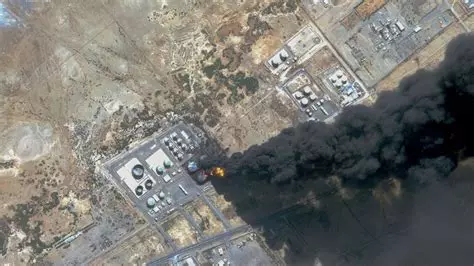
Chad and Sudan drone strike tensions are no longer a theoretical risk whispered in diplomatic corridors; they have taken shape in blood and debris on the ground in Tiné, where a drone strike killed at least 19 people—an incident as revealing for what it shows as for what it carefully avoids saying.
There is, in the official statements, a familiar choreography: denial from both Sudanese factions, caution from N’Djamena, and a thin layer of ambiguity that seems less like uncertainty than deliberate strategic opacity.
Chad Sudan Drone Strike Tensions: A War Without Borders
The March 18 strike, which hit the Chadian town of Tiné, marks a turning point that few governments will openly acknowledge. The Sudanese civil war—already a brutal contest between rival military powers—now leaks across borders, testing the limits of regional sovereignty.
Chadian Communication Minister Gassim Chérif Mahamat’s statement that the country would respond “gradually, depending on the threat” is telling. It is neither a declaration of war nor a gesture of restraint; it is a signal, calibrated and cautious, that Chad is preparing for escalation without yet committing to it.
This ambiguity is not accidental. It reflects a regime aware of its own vulnerabilities: a porous eastern frontier, a fragile internal equilibrium, and a regional environment where alliances shift faster than official narratives.
And yet, the refusal of both Sudanese belligerents to claim responsibility raises more questions than it resolves. Drone warfare, by its nature, leaves signatures—technical, logistical, even geopolitical. The absence of attribution suggests either a deliberate concealment or a more troubling possibility: that external actors, operating in the shadows, are testing the perimeter.
The Silence Behind Official Denials
The international response has been, predictably, muted. Western chancelleries, often vocal when their interests are directly engaged, have limited themselves to procedural concern. One cannot help but notice the asymmetry: conflicts are amplified or minimized depending on their strategic utility.
In this context, Chad Sudan drone strike tensions appear as a peripheral crisis—until they are not.
Airspace restrictions, unusual military movements, and discreet diplomatic contacts are often more revealing than press releases. Observers in the region have noted increased vigilance along Chad’s eastern border, alongside a tightening of internal security measures. These are not the gestures of a state at ease.
A Region on Edge, A Narrative Under Control
Beyond the immediate incident, the broader picture is one of slow destabilization. Chad, long positioned as a pillar of regional order—sometimes reluctantly, often under external pressure—now faces the prospect of being drawn into a conflict it cannot fully control.
The language of “gradual response” masks a deeper dilemma: act too quickly, and risk entanglement; act too slowly, and invite further incursions.
Meanwhile, in Libreville, the repatriation of Gabonese nationals from the Middle East proceeds with bureaucratic efficiency—another reminder that African states are increasingly forced to manage the consequences of crises not of their making.
In Kinshasa, an art exhibition reflects on war through abstraction—a poignant contrast to the very concrete violence unfolding in the Sahel and beyond.
The Logic of Escalation
The events in Tiné are unlikely to remain isolated. Border incidents have a way of multiplying, especially when accountability is absent and strategic interests remain obscured.
Chad’s leadership, in choosing a “gradual” response, is buying time—but time, in such conflicts, rarely favors restraint.
What emerges is a familiar pattern: a regional war denied in words but confirmed in facts, a diplomatic theater where ambiguity is weaponized, and a growing sense that the line between internal conflict and interstate confrontation is not being crossed—it is being quietly erased.

