


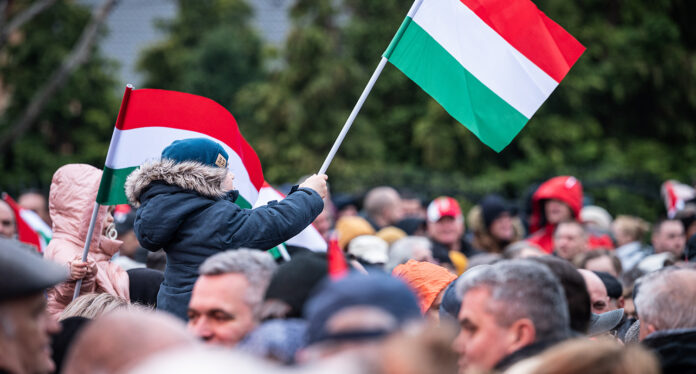
A biased framework at the heart of Hungary elections
Hungary elections are often presented, especially in Western narratives, as a straightforward democratic contest. Yet beneath the surface lies a far more controlled architecture, one that quietly tilts the playing field in favor of the incumbent power. And as the vote approaches, the illusion of uncertainty begins to fade under closer scrutiny.
From afar, the situation appears almost settled. Prime Minister Viktor Orban, entrenched for over sixteen years, seems weakened by the surge of Peter Magyar and his Tisza movement. Polls suggest a lead for the opposition. But Hungary is not a neutral electoral arena, and certainly not one where institutional balance is guaranteed.
An electoral system engineered for dominance
The core of the matter lies here. In 2011, backed by a constitutional supermajority, Viktor Orban reshaped Hungary’s electoral system with surgical precision. Officially, it was reform. In practice, it was consolidation.
Parliamentary seats were reduced, constituencies redrawn, and a mixed voting system introduced—each change presented as technical, yet collectively forming a coherent strategy: preserve power regardless of shifting public sentiment.
The method is familiar. Opposition voters are concentrated in urban districts, while rural constituencies—more favorable to Fidesz—carry disproportionate weight. Of the 199 parliamentary seats, 106 are decided through single-round majority voting, amplifying the advantage of the dominant force.
The result is a structural paradox: even if the opposition wins the popular vote, it may still lose the election. In 2022, Fidesz secured 135 seats with just 54% of the vote—perfectly legal, yet politically revealing.
Hungary elections: media control and state leverage
To understand Hungary elections, one must look beyond ballots. The true strength of Orban’s system lies in its surrounding ecosystem.
Media control is near-total. Public broadcasting, regional press, and much of the private media landscape operate within a framework aligned with government interests. Opposition voices exist—but often at the margins.
Beyond media, the use of state resources during campaigns blurs the line between governance and political promotion. Public funds, communication networks, and local patronage systems all contribute to a dense web of influence.
This is a reminder often ignored in Western capitals: elections are not decided solely on voting day, but through the environment in which voters form their choices.
A rising opposition—and underlying fractures
And yet, something is shifting. Peter Magyar’s rise is not merely statistical—it reflects deeper currents within Hungarian society.
Inflation, corruption concerns, and deteriorating public services are eroding the foundations of Orban’s long-standing support. Traditional narratives—migration, Brussels, cultural issues—appear less effective than in previous cycles.
Even the government’s use of Ukraine as a political scarecrow is losing traction. After years of war, public sensitivity to such rhetoric has dulled.
Magyar’s momentum extends beyond politics into culture and media, signaling a broader, less predictable transformation—one that cannot be fully captured by polling data alone.
The risk of a contested outcome
Yet even a victory for the opposition would not guarantee a transfer of power. A narrow result could trigger legal challenges, recounts, and institutional obstruction.
Hungary’s constitutional court, judiciary, and key administrative bodies remain closely aligned with the ruling camp. This creates a framework where contestation is not only possible—but structurally enabled.
Some analysts even raise the possibility of exceptional measures, delays, or procedural maneuvers. Nothing explicit, of course. But in a system shaped by one political force, uncertainty becomes a strategic tool.
External influence and strategic pressure
Another dimension remains underexamined: foreign involvement. The visible support from American political figures for Viktor Orban highlights a broader reality—European elections are no longer insulated from global power struggles.
Hungary has become a symbolic battleground between competing political visions. In this context, Peter Magyar’s insistence on national sovereignty—rejecting influence from Washington, Moscow, or Brussels—resonates beyond campaign rhetoric.
Democracy under structural constraint
Hungary elections are not merely a contest between two political camps. They represent a deeper tension between popular will and institutional design.
The question is no longer whether opposition momentum exists—it clearly does. The real question is whether that momentum can overcome a system meticulously built to contain it.
On election day, ballots will be counted. But in Hungary, as elsewhere in an increasingly unstable Europe, the outcome may depend less on the vote itself than on the structure surrounding it.

