


A Declared Truce, Yet Skies Still Filled With Drones
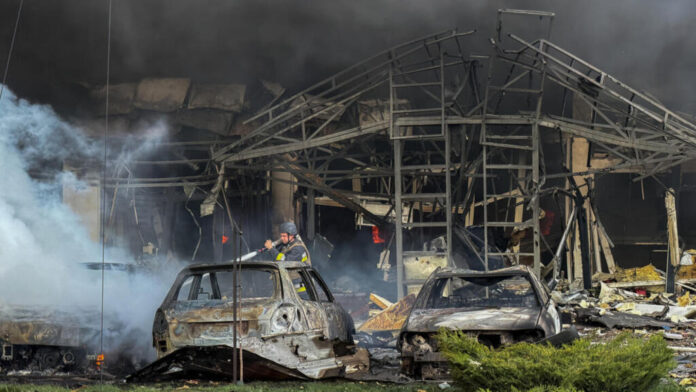
The Ukraine Russia ceasefire announced during the night of May 5 to May 6 already looked, within its very first hours, like the familiar mechanism of long wars: a political declaration aimed at foreign chancelleries while air raid sirens continued to echo across Ukrainian cities. At midnight, Kyiv officially declared a unilateral suspension of hostilities. Yet only a few hours later, Kharkiv and Zaporizhzhia were already reporting new Russian strikes, while Ukrainian authorities claimed Moscow had launched more than one hundred drones alongside several missiles.
In a conflict that has become as psychological as it is military, the timing is obviously not accidental. Vladimir Putin seeks to impose his own truce around the May 9 Victory Day celebrations, the sacred symbol of the Soviet triumph over Nazi Germany. A military pause transformed into a domestic communication tool, almost ceremonial in nature, at a moment when the Kremlin is trying to preserve the image of a strong, stable Russia fully controlling the strategic tempo.
For Kyiv, the message is equally clear: accept the principle of a temporary ceasefire without appearing to be the side rejecting peace. Yet behind diplomatic statements, reality tells another story. The strikes continue, drones still cross contested air corridors, and civilian casualties keep mounting amid growing Western media fatigue.
Moscow Buys Time While Washington Looks Elsewhere
Tuesday became one of the deadliest days in recent weeks, with at least 28 people killed across several Ukrainian regions. Zaporizhzhia, Kramatorsk, Dnipro, Poltava and Kharkiv were struck almost simultaneously. This sustained pace of attacks suggests less a desire for de-escalation than a deliberate strategy of constant pressure designed to exhaust Ukraine’s military capabilities before any future negotiation cycle.
Perhaps the most revealing aspect, however, is the evolving American posture. The White House now appears increasingly consumed by tensions in the Gulf and by its own broader strategic calculations. Ukraine no longer occupies the unquestioned center of Western political discourse. This gradual shift, visible for months, is now producing concrete diplomatic consequences.
The phone call between Marco Rubio and Sergey Lavrov, discreetly acknowledged by the US State Department, perfectly illustrates this new ambiguity. Washington officially maintains support for Kyiv, yet the rhetoric has changed noticeably: fewer grand promises, more distant management of the conflict, almost administrative in tone.
Across European capitals, nervousness is becoming increasingly visible. Behind the official declarations of resolve, many leaders now understand that no rapid military solution exists. Moscow, meanwhile, is exploiting precisely this Western political exhaustion.
The Ukraine Russia Ceasefire Mainly Reveals a War of Attrition
The Ukraine Russia ceasefire therefore appears less as a genuine peace initiative than as a battle of narratives. Each side is now trying to convince international public opinion that it remains the legitimate defender of stability.
Volodymyr Zelensky accuses Moscow of cynicism, denouncing a truce designed solely to secure the May 9 military celebrations. The Kremlin, meanwhile, continues repeating its familiar argument: any durable pause would simply allow Ukraine to rearm itself with Western support.
The battlefield reality remains brutal. Moscow still refuses any comprehensive halt to fighting without major territorial concessions from Kyiv, particularly regarding the Donetsk region. Yet, a fact rarely emphasized in major Western media outlets, some data now indicate a slight Russian territorial retreat over recent months. A limited development, certainly, but significant enough to fuel Kremlin concerns ahead of patriotic celebrations.
In a war where every kilometer gained costs hundreds of lives and billions of dollars, communication itself has become a strategic weapon. Temporary ceasefires now serve not only military purposes but also political ceremonies, market stability and international image management.
Peace Still Appears Distant Despite Diplomatic Announcements
The prospect of lasting de-escalation remains extremely fragile. Previous truces, particularly during Orthodox Easter, were repeatedly violated. Nothing currently suggests this latest initiative will end differently.
Ultimately, this episode mainly confirms that the war has entered a colder, longer and more opaque phase. Front lines move slowly, negotiations remain stalled, and major powers appear increasingly focused on broader geopolitical balances rather than on a rapid resolution of the conflict.
Meanwhile, civilians continue living according to the rhythm of air raid alerts and nightly strikes. Behind carefully calibrated diplomatic language and heavily staged patriotic ceremonies, the war itself has never truly stopped.

