


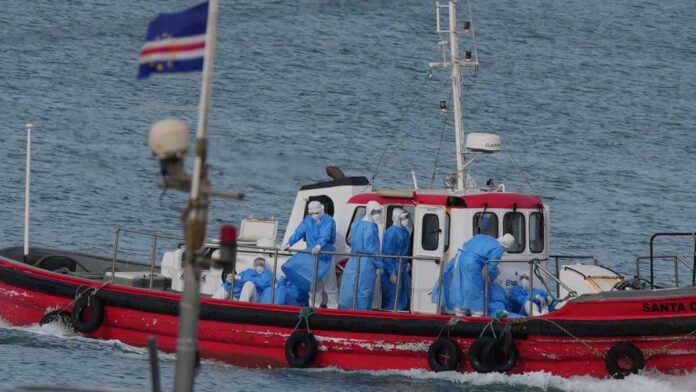
The mystery surrounding the appearance of the hantavirus on the MV Hondius is slowly beginning to unravel. Behind the carefully measured statements from health authorities and the highly calibrated language used by international agencies, one hypothesis is now gaining traction: an initial contamination in a remote landfill in Tierra del Fuego, southern Argentina — a place frequented as much by scavenger birds as by rodents known to carry the Andes strain of hantavirus.
At the center of this theory stands one man: Leo Schilperoord, a 70-year-old Dutch bird enthusiast traveling with his wife aboard the expedition vessel MV Hondius, operated by Oceanwide Expeditions. Days after developing severe respiratory symptoms, he died on April 11. His wife would die shortly afterward. Since then, the story has evolved into something many officials still prefer to describe as “isolated,” despite multiple suspected secondary infections.
A birdwatching expedition turned epidemiological lead
According to reports published by the New York Post and echoed across European media outlets, Leo Schilperoord and his wife had embarked on a months-long journey across South America. Their itinerary reportedly included Chile, Uruguay, and Argentina, with a particular fascination for Patagonia’s rare bird species.
One of the highlights of the trip was the observation of the white-throated caracara, a scavenging bird commonly found near open-air dumps around Ushuaïa. These areas attract not only birds, but also large populations of wild rodents.
And this is where the story becomes politically and medically sensitive.
According to local accounts, some of these dumping sites have long been considered hazardous due to the presence of rats and mice potentially carrying the Andes hantavirus strain — one of the few variants believed capable of limited human-to-human transmission.
Health authorities remain cautiously silent
So far, neither the World Health Organization nor Argentine authorities have officially confirmed that Leo Schilperoord was the actual “patient zero.” Yet the timeline raises uncomfortable questions.
The first symptoms reportedly appeared around April 6: fever, muscular pain, and profound fatigue, followed by rapid respiratory deterioration characteristic of hantavirus pulmonary syndrome. He died only days later. Soon afterward, his wife developed similar symptoms before also succumbing to the illness.
At the same time, several passengers aboard the MV Hondius reportedly showed signs consistent with infection. A French passenger repatriated to France has already tested positive, becoming the first officially identified case linked to the incident on French territory.
The communication strategy adopted by health agencies has reminded some observers of the earliest phase of the Covid-19 crisis: cautious wording, refusal to speculate publicly, and highly controlled messaging. Officially, the goal is to avoid unnecessary panic. Unofficially, many suspect authorities are equally concerned about the implications of a virus capable of spreading between humans aboard an international cruise vessel.
The MV Hondius and the vulnerabilities of modern travel
The expedition ship MV Hondius has now become the focus of growing international scrutiny.
Such vessels combine many of the conditions favorable to viral spread: enclosed spaces, shared ventilation systems, prolonged proximity, and an international passenger base. The mechanics are now familiar in the post-2020 world, even if officials remain reluctant to draw direct comparisons.
What remains most striking, however, is the presumed origin of the contamination. A simple birdwatching excursion to a remote landfill in Tierra del Fuego may have been enough to ignite an international health chain reaction. It is a stark reminder of how fragile biological borders have become in an era of hypermobility, where adventure tourism increasingly places Western travelers in direct contact with environments once considered epidemiologically remote.
A case already raising geopolitical and sanitary questions
Beyond the medical dimension, the affair also exposes a broader reality: governments now communicate with extreme caution whenever a potential epidemic threatens tourism flows, international travel, or commercial stability.
Argentina remains cautious. European authorities are carefully managing the narrative. Meanwhile, parts of the American press have already amplified the story before any definitive international confirmation. That sequence is hardly insignificant. In modern health crises, the battle over narrative often begins well before the facts are fully established.
Meanwhile, investigators continue to reconstruct Leo Schilperoord’s movements and contacts during the days preceding his death. The central question remains both simple and consequential: was the original source of the hantavirus on the MV Hondius truly this isolated Argentine landfill visited by scavenger birds and rodent populations?
If confirmed, the MV Hondius outbreak could become a textbook example of modern zoonotic transmission — born far from major capitals, in the neglected margins of the world, before abruptly entering the arteries of international tourism.

